October 2026 Research-Focused Faculty Meeting: Presenters Overview
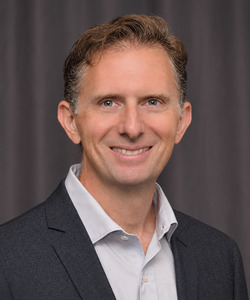
James DiLellio (Decision Sciences)Research Title: A Holistic Approach to Tax-Efficiency in Early-Stage Retirement Income Decisions |
|
|
|
Description: The first rule of traditional tax planning is to defer taxes whenever
possible. However, academic research suggests that tax-efficient retirement income
may violate this rule by providing evidence of the benefits of early tax-deferred
account distributions. Alternatively, early-stage retirees may try to use Roth conversions
to exploit their low marginal tax rate. To make this analysis more tractable, much
of the academic literature considers these two alternatives in isolation from one
another for a typical retiree in the United States. Here, we develop a single-period
non-linear programming model that breaks this isolation. We show that there are alternative
decisions that can lead to equivalent financial outcomes for after-tax wealth due
largely to the progressive U.S. income tax system. This applied research helps guide
financial planners and their use of FinTech software to untangle this complexity in
their practice and manage longevity and market risks associated with optimal alternatives. |
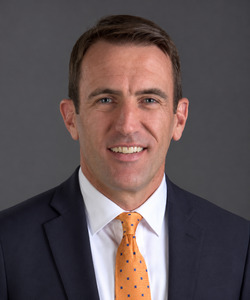
Cristina Gibson (Management)Research Title: Partnerships for Social Cohesion and Social Impact: How Corporate-Community Co-development Constitutes an Impactful HR Initiative |
|
|
|
Description: Organizational scholars have begun to recognize the importance of social
cohesion, but we know little about how it can lead to broader social impact, and even
less about the role of human resource management (HRM) in these processes. To investigate
this link, we examined corporate community co-development as a particularly impactful
HRM initiative. The program involved a Silicon Valley technology company partnering
with five nonprofit organizations. Our study comprised a comprehensive mixed-method
longitudinal design involving 62 interviews and 382 hours of field observations combined
with a large-scale quantitative survey (n=1101). The findings reveal that HR managers
not only facilitated the logistics of the program, but also helped to create three
generative tensions: the balancing of belonging and uniqueness, of the familiar and
the unfamiliar, and of within-sector and across-sector connections. HRM helped participants
navigate these tensions through specific processes that combined human and social
capital to develop social cohesion. We also empirically demonstrate that social cohesion
was positively associated with social impact in both the company and the nonprofits. |
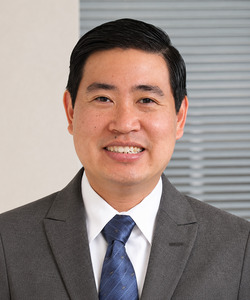
Kevin S. Groves (Management)Research Title: Next Generation Family Business Leaders: Antecedents & Behavioral Mechanisms of Succession Intention |
|
|
|
Description: Building upon the theory of planned behavior and family business research,
this study examines entrepreneurial family background (prior family business exposure
and family business self-efficacy) as an intergenerational influence on the succession
intention of next generation family business leaders. Addressing a gap in succession
intention research, the study assesses two mechanisms (attitude toward family business
succession and perceived family support) that explain the relationship between entrepreneurial
family background and succession intention. A quantitative survey-based research design
was employed to examine a sample of 278 next generation family business leaders from
Austria, USA, and other countries. Attitude toward family business succession significantly
explains the relationship between prior family business exposure and succession intention,
whereas perceived family support does not. Family business self-efficacy is strongly
related to succession intention directly and indirectly through attitude toward family
business succession and perceived family support. The study contributes to succession
intention research by showing that prior family business exposure and family business
self-efficacy are associated with succession intention through different mechanisms.
Prior family business exposure is linked to succession intention through attitude
toward family business succession, whereas family business self-efficacy demonstrates
a strong direct relationship with succession intention and significant indirect relationships
through both attitude and perceived family support. Future research directions for
family business scholarship and practical implications for family business firms are
discussed, including the development of succession management capabilities that provide
next generation leaders with positive early-career developmental experiences. |
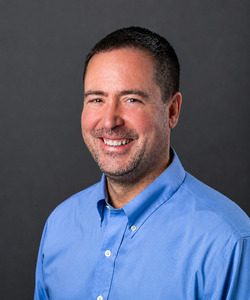
Maretno Agus Harjoto (Finance)Research Title: Who Do Impact Investors Associate With? Partnerships with Academia, Government, NGOs, and Corporations |
|
|
|
Description: Grounded in institutional logics for hybrid organizations, we contrast
impact investing that has dual (social and commercial) objectives from philanthropic/CSR
and conventional investment. Integrating cooperative strategic alliances into institutional
logics, we posit that impact investing firms tend to partner with academia, NGOs,
government, and corporations to secure legitimacy. Analyzing website statements from
9,146 private investment firms across 115 countries, we find that impact investing
firms are distinct from both philanthropic/CSR and conventional private investment
firms. Impact investment firms are more likely to partner with academia, NGOs, government,
and corporations to serve as resource-based legitimacy to achieve social and commercial
logics. |
Brandon Parsons (Economics)Research Title: Does Economic Freedom Light the Shadows? Economic Freedom and the Informal Economy in Developing Countries |
|
|
|
Description: In many developing countries, a large share of economic activity happens
"in the shadows," outside tax systems, regulation and legal protection. This study,
co-authored with David Smith and published in Economic Change and Restructuring (2026),
asks whether market-oriented reforms bring that activity into the formal economy,
and which reforms matter most. Using a panel of developing countries from 1996 to
2018 and two measures of informality, we find that a sound legal system, trade freedom
and regulatory quality are the strongest drivers of formalization. The effect is not
automatic, though. Corruption keeps activity in the shadows even where economic freedom
is high, while investment in human capital strengthens the move to the formal sector.
For business and policy leaders, the takeaway is that market reforms work best when
paired with anti-corruption efforts and education. |
Doreen Shanahan (Marketing)Research Title: Technology Adoption Research Related to Aging Consumers |
|
|
|
Description: By 2030, nearly 1 in 5 people in the United States will be over 65 and
the vast majority desire to remain safe, comfortable, and independent in their home
for as long as possible. Research suggests that assistive monitoring technologies
are essential to supporting independent living while aging in place. While a wide
range of assistive technologies have entered the market (e.g., smart home technologies,
wearable medical devices, medical alert system, remote patient monitoring, etc.),
their adoption among aging adults remains low. This research seeks to contribute to
the developing body of consumer research related to aging consumers’ technology adoption.
We will share the results of our first study in which we explore the role anticipatory
factors play in older adults’ (age 65 – 90) appraisal of technology products as congruent
with future outcomes (e.g., aging in place). This area of research holds the potential
to impact not just business practitioners and policy makers who participate in the
ecosystem of care for our aging population, but society at large. |